Results Filter:
- Websites
- Books
- Media
A Life Like Mine
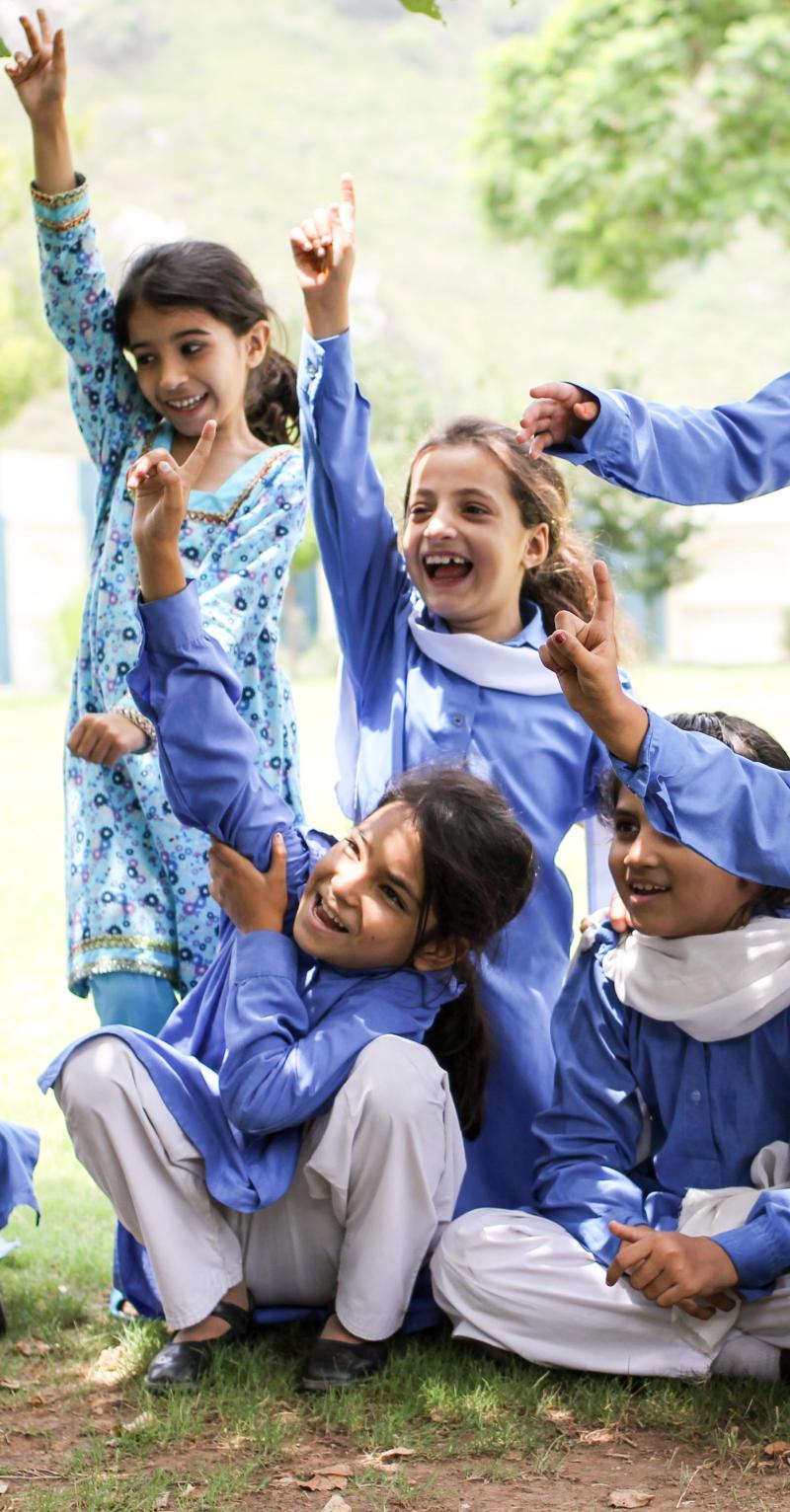
Posted by: mmerryfield on Wednesday, March 3, 2010A Life Like Mine tells the story of how children live around the world through four themes: survival, development, protection, participation. Excellent images and text suitable for upper elementary and middle school students. Truly has a global perspective. Includes many visuals and maps.
Is is published by UNICEF.
Khrushchev : A Political Life
Posted by: admin on Monday, February 8, 2010Recommended because Recommended as a recent and comprehensive biography of the controversial Soviet leader. An even more recent biography of Khrushchev (and one based more on archival revelations) is William Taubman’s Khrushchev: The Man and His Era (2003).
Citation: William J. Tompson (1997)
From Nyet to Da: Understanding the Russians
Posted by: admin onRecommended because this is the single best book for Americans to read to gain insight into how and why Russians think and act differently than us. Remarkable insights into how the Russian character has been shaped by their culture, geography, political system, etc. Not only useful, this is a very readable and interesting book. Reviewed by Bill Wolf.
Citation: Richmond, Yale. (1996). Paperback, 219 pages; Revised & Updated edition; Intercultural Press; ISBN: 1877864412
Central Asia: Kirghizstan & Uzbekistan (1997)
Posted by: admin onRecommended because this Lonely Planet video serves as a great introduction to two former Soviet republics in Central Asia. With host Ian Wright, the viewer is taken on a ride in an old Red Army helicopter, joins in evening entertainments including ram butting and wrestling, meets an eagle trainer, and participates in a horse trek meeting nomadic shepherds. Available for free loan from the Ohio State University Center for Slavic and East European Studies (tel: 614-292-8770, or write to Keisel.1@osu.edu), or may be purchased from Lonely Planet for $20.
Habiba: A Sufi Saint from Uzbekistan
Posted by: admin onRecommended because its insights into the culture of Uzbekistan. Habiba is a Tabib, a Muslim healer. She belongs to the earliest Sufi “Chain of Mystic Transmission,” a lineage of teachers whose main representative is a great master, Bahaudin Nacksband. Uzbekistan is a dream-like land, a crossroad of Western and Eastern civilization along the Silk Road (30 minutes). Available from Facets Multimedia for $25.
In Search of Genghis Khan
Posted by: admin onRecommended because this program looks at the legend and the traces of Genghis Khan as well as the people and culture of his descendants, whose lives are barely changed since the Mongol horde burst out of Central Asia in the 13th century to ride as far as the gates of Vienna and permanently change the face of most of Asia and Europe (54 minutes). This film is available from Films for the Humanities for $90.
Realms of the Russian Bear, Volume 3: The Red Deserts
Posted by: admin onRecommended because in this film one sees the surprisingly abundant wildlife of the deserts of Central Asia, which cover an area larger than the whole of Western Europe and contain a nature reserve that springs to life when melting snows bring poppy fields and pistachio groves to life (60 min). A BBC production from about 1990. Available from Facets Mulitmedia for $30.
The Collapse of the Aral Sea Ecosystem (2000)
Posted by: admin onRecommended because the Aral Sea used to be one of the world’s largest and most productive inland bodies of water until a Soviet plan to turn Central Asia into the greatest cotton-producer on Earth destroyed it. Now mostly a sterile lake amidst a desert poisoned by decades of fertilizer and pesticide runoff, the Aral Sea, itself ruined, is ruining the lives of all who still live near it. This program is recommended because it details the irreversible damage to the ecosystem and the resulting health problems being faced by the remaining inhabitants of the region. “The Aral Sea and the tragic plight of its people is not a freak, isolated event, but a crisis that is just slightly ahead of its time,” says host David Suzuki (54 minutes). Available for purchase from Films for the Humanities for $150.
The Two Roads to the Pamirs
Posted by: admin onRecommended because this video describes the little-known country of Tajikistan. The Pamirs are a formidably high mountain range in the Central Asian nation of Tajikistan. Kashgar is a Muslim town which can be seen caught up in the riotous celebration greeting the end of Ramadan. Here master craftsmen still transform silk and wood into precious commodities prized the world over. Finally, a Tajik wedding party shows the people of this often overlooked region engaged in an intimate ceremony which everyone can understand and enjoy (55 minutes). Part of the series, “The Silk Road,” available from Facets Multimedia for $30.
Where Horses Fly Like the Wind
Posted by: admin onRecommended because across the Tian-Shen mountains lies the region inhabited by Kazahks, descendants of the Mongols, former rulers of the great Mongol empire. In the West Land are the very horses used by Ghengis Khan and his men (55 minutes). Part of the series, “The Silk Road.” Available from Facets Multimedia for $30.
Dateline 1989: Hungary (1991)
Posted by: admin onRecommended because this historical documentary covers events from the 1956 uprising which was eventually crushed by Soviet tanks, through the 1980s moves toward democratic reform (23 minutes). Available for free loan from the Ohio State University Center for Slavic and East European Studies (call 614-292-8770 or write to Keisel.1@osu.edu); apparently out of print.
Dateline 1989: Prague (1991)
Posted by: admin onRecommended because this is a very good documentary on the history of Czechoslovakia from the Soviet invasion of 1968 to the election of Vaclav Havel in 1989 (23 minutes). Available for free loan from the Ohio State University Center for Slavic and East European Studies (call 614-292-8770 or write to Keisel.1@osu.edu); apparently out of print.
The Magic Goldfish (1995)
Posted by: admin onRecommended because this is a classic fairy tale is about an old man who receives three wishes from a magic goldfish and his wife’s accompanying greed. The book is beautifully illustrated with full-page pictures and perfect for story time. It is also apparently out of print. Grades K-2. Available for free loan from the University of Pittsburgh Center for Russian and East European Studies (http://www.ucis.pitt.edu/crees/outres.html#story).
Citation: by Aleksander Pushkin, illustrated by Demi. Henry Holt & Co.
Koshka’s Tales (1993)
Posted by: admin onRecommended because of it stories from Russia. 80pp, currently out of print. Designed for grades K-5. The author has retold five of the most famous Russian fairy tales in contemporary English. The tales are woven together by the cat Koshka, a wise old story-telling cat, who is narrating to a banished Tsaritsa and are accompanied by full-color, full-page illustrations, also done by Mayhew. Available for a free loan from the Indiana University Russian and East European Institute. (http://www.indiana.edu/~reeiweb/audiovisual/avoutrea.html#elementary).
Citation: by James Mayhew. Kingfisher Books
How to Decorate Beautiful Ukrainian Easter Eggs
Posted by: admin onRecommended because “Pysanky” is the term for the Ukrainian way to decorate Easter Eggs. This pamphlet can turn any school’s celebration of Easter into a chance to learn about a foreign culture while having fun. Available at the Ukrainian Gift Shop. Also available for free loan at the University of Pittsburgh’s Center for Russian and East European Studies (http://www.ucis.pitt.edu/crees/outres). Designed for grades K-6.
Citation: by Luba Perchyshyn
The Firebird (1994)
Posted by: admin onRecommended because the classic Russian tale about the magic firebird is retold through beautiful illustrations that make the story more mystical than the bird itself. Grades K-2. Available for free loan from the University of Pittsburgh Center for Russian and East European Studies (http://www.ucis.pitt.edu/crees/outres.html#story).
Citation: Illustrated by Demi, Henry Holt
Dateline 1956: Budapest (1991)
Posted by: admin onRecommended because this is a high quality historical documentary exploring the national and international events that led to Hungary’s brief period of freedom, and the November 4th Soviet military invasion that crushed the Hungarian revolution (23 minutes). Available for free loan from the Ohio State University Center for Slavic and East European Studies (call 614-292-8770 or write to Keisel.1@osu.edu); apparently out of print.
Dateline 1968: Czechoslovakia (1991)
Posted by: admin onRecommended because this is a fine documentary on Czech history beginning with the Prague Spring and ending with the Soviet suppression (23 minutes). Available for free loan from the Ohio State University Center for Slavic and East European Studies (call 614-292-8770 or write to Keisel.1@osu.edu); apparently out of print.
People’s Century: Ordinary People, Extraordinary Times (1997)
Posted by: admin onRecommended because this is a high quality film documentary of the twentieth century. The OSU Slavic Center has several episodes, all concerned with themes relating to Eastern Europe and communism. These include: “Brave New World: The Cold War Begins (194Slavic and Eastern Europe-62),” “Fallout: Nuclear Energy and Destruction (1942-87),” “People Power: The End of Soviet-Style Communism (1980-93),” and ” Red Flag: Communism in Russia (19Africa-36),” all of which are described separately in this section. The series is a joint production of the BBC and WGBH Boston. Available for free loan from the Ohio State University Center for Slavic and East European Studies (call 614-292-8770 or write to: Keisel.1@osu.edu), or the entire series may be purchased from Amazon.com for $350.
Great Russian Writers: Anton Chekhov
Posted by: admin onRecommended because this is a biographical account of Anton Chekhov, Russian short-story writer and dramatist who lived from 1860 to 1904. His most famous works include The Seagull, Uncle Vanya, The Three Sisters, and The Cherry Orchard (25 minutes). In English. Available for loan from Ohio State University Center for Slavic and East European Studies (call 614-292-8770 or write to Keisel.1@osu.edu), or may be purchased from Facets Multimedia for $20.
Great Russian Writers: Boris Pasternak
Posted by: admin onRecommended because this is a biographical account of the Soviet poet and Nobel Prize winning author who lived from 1890 to 1960. His Doctor Zhivago was awarded the Nobel Prize in Literature in 1958 (25 minutes). In English. Available for loan from Ohio State University Center for Slavic and East European Studies (call 614-292-8770 or write to Keisel.1@osu.edu), or may be purchased from Facets Multimedia for $20.
Great Russian Writers: Maxim Gorky
Posted by: admin onRecommended because this is a biographical account of the novelist and playwright and founder of Socialist Realism. Gorky was born in 1868 and died in 1936. His most famous works include Mother, The Lower Depths, In the World, and The Gorky Trilogy (25 minutes). In English. Available for loan from Ohio State University Center for Slavic and East European Studies (call 614-292-8770 or write to Keisel.1@osu.edu), or may be purchased from Facets Multimedia for $20.
Great Russian Writers: Vladimir Mayakovsky
Posted by: admin onRecommended because this is a biographical account of the foremost Bolshevik poet in the early Soviet era. Born in 1893, Mayakovsky committed suicide in 1930. His most famous works include A Cloud in Trousers, The Backbone Flute, Ode to Revolution, and Left March (25 minutes). In English. Available for loan from Ohio State University Center for Slavic and East European Studies (call 614-292-8770 or write to Keisel.1@osu.edu), or may be purchased from Facets Multimedia for $20.
Lady with a Dog (Dama s sobachkoi) (1960)
Posted by: admin onRecommended because this is a classic short story by Chekhov that has been made into an excellent film. This is the story of a man and a woman, both already married, who fall in love while vacationing in turn of the century Yalta. Directed by Josef Heifitz, stars Iya Savvina and Alexei Batalov (black & white, 89 minutes). In Russian with English subtitles. Available for loan from Ohio State University Center for Slavic and East European Studies (call 614-292-8770 or write to Keisel.1@osu.edu), or may be purchased from Facets Multimedia for $30.
Nabokov, Vladimir (1996)
Posted by: admin onRecommended because this is a biography of the emigre Russian writer. Relatives, friends, and professional associates examine the life and works of the Russian-born novelist and critic. Nabokov, who began his literary career as a poet, is perhaps best known for his controversial work on Nikolai Gogol. Writing extensively both in Russian and English, his intricate, stylish literary effects and unorthodox structure are apparent in works including Pale Fire and The Gift. Excerpts from these and other novels reinforce the core thesis of his entire body of fiction: the problem of art itself, presented in various figurative disguises. BBC production (53 min). In English. Available for loan from Ohio State University Center for Slavic and East European Studies (call 614-292-8770 or write to Keisel.1@osu.edu), or may be purchased from Films for the Humanities for $90.

Princess Frog (Tsarevna-liagushka) (1954)
Posted by: admin onRecommended because this is the cartoon version of the Russian fable by the same name. A handsome and kind prince must overcome numerous obstacles to reverse the spell that has transformed a princess into a frog. Directed by M. Tsekhanovskii. Also included on this tape is “V nekotorom tsarstve.” Collection number 37 in the Soyuzmul’tfil’m series. In Russian. Available for loan from Ohio State University Center for Slavic and East European Studies (call 614-292-8770 or write to Keisel.1@osu.edu); not clear if it is still available commercially.
The Face of Russia: Part 2:The Fa
Posted by: admin onRecommended because this is part of the three-part documentary on Russian art and culture, written and hosted by James Billington, Librarian of Congress, and author of The Icon and the Axe, a classic text on Russian culture. In Part 2, Russian architecture is examined, with a focus on St. Petersburg and Tsarskoe Selo. More importantly for our purposes, the part two is recommended because it also looks at the writings of Gogol, who revealed the human suffering behind Russia’s “Facade of Power.” His Dead Souls first inspired 19th-century political radicals, then Soviet dissidents, and still influences Russian artists today (60 minutes). In English. Available for loan from Ohio State University Center for Slavic and East European Studies (call 614-292-8770 or write to Keisel.1@osu.edu), or may be purchased from Facets Multimedia for $30.
The Firebird (1991)
Posted by: admin onRecommended because this animated film is part of the “Rabbit Ears” series of children’s stories and is a video version of one of the most popular Russian fairy tales. In particular, Firebird is a Russian legend about an archer named Ivan and his inseperable companion, the Horse of Power. When Ivan brings a golden feather from the Firebird to the Tsar, he is ordered to present the entire bird, or lose his life. Then he is commanded to retrieve the princess Vassilisa from the end of the earth so that the Tsar might marry her. When the archer Ivan falls in love with the princess, he and the Horse of Power must find a way to thwart the Tsar. Narrated by Susan Sarandon, original music by Mark Isham, animation done in Russia (30 minutes). In English. Available for loan from Ohio State University Center for Slavic and East European Studies (call 614-292-8770 or write to Keisel.1@osu.edu), or may be purchased from Facets Multimedia for $20.
The Shooting Party (Moi laskovyi i nezhnyi zver’) (1977)
Posted by: admin onRecommended because this is a drama in film version based on a story (“Drama na okhote”) by Chekhov. The story of a magistrate who, unable to admit his love for a woodsman’s daughter, watches as she marries an estate manager and falls into a loveless affair with the estate’s owner, a decadent count. Directed by Emil Loteanu, stars Galya Belyaeva, Oleg Yankovsky, Kirill Lavrov, and Leonid Markov (105 min). In Russian with English subtitles. Available for loan from Ohio State University Center for Slavic and East European Studies (call 614-292-8770 or write to Keisel.1@osu.edu), but no longer available commercially.
Tolstoy, Leo (1983)
Posted by: admin onRecommended because this is a biography of the late 19th century writer. Directed by Sergei Gerasimov, stars Nikolai Eremenko and Marina Ustimenko (103 minutes). In Russian with English subtitles. Available for loan from Ohio State University Center for Slavic and East European Studies (call 614-292-8770 or write to Keisel.1@osu.edu), or may be purchased from Facets Multimedia for $60.
Tsvetayeva, Marina
Posted by: admin onRecommended because Marina Tsvetayeva was one of the great poets of the 20th century and a contemporary of Akhmatova, Pasternak, Mandelstam, and Mayakovsky. She lived through World War I, the Revolution, the Civil War, and the Moscow Famine, and then in exile in Germany, Czechoslovakia, France, and internal exile back in the Soviet Union. Determined to remain apolitical, she became a victim of her convictions. Her husband became an NKVD agent in Paris and her daughter a staunch Communist. She was shunned by the Russian
Koshka’s Tales: Stories from Russia (1993)
Posted by: admin onRecommended because Recommended because the author has retold five of the most famous Russian fairy tales in contemporary English. The tales are woven together by the cat Koshka, a wise old story-telling cat, who is narrating to a banished Tsaritsa and are accompanied by full-color, full-page illustrations, also done by Mayhew. Suitable for elementary school age students. Available from Indiana University Russian and East European Studies Institute.Reviewed by Bill Wolf, August 2003.
Citation: James Mayhew, Kingfisher Books, 80 pages.
The Cambridge Companion to the Classic Russian Novel (1998)
Posted by: admin onRecommended because Recommended because it features recent essays by prominent scholars, in which works by Pushkin, Dostoevsky, Tolstoy, Turgenev, Bulgakov, Nabokov, Pasternak, Solzhenitsyn, and many others are described and discussed. There is a chronology and guide to further reading. All quotations are in English. A valuable guide for students, scholars, and anyone interested in the Russian novel. Available in both used and new condition from Amazon.com for prices starting about $7. Reviewed by Bill Wolf, 2002; updated August 2003.
Citation: Malcolm V. Jones (Editor), Robin Feuer Miller (Editor), Victor Terras (Contributor), Lesley Milne (Contributor), Cambridge University Press
A Life Like Mine: How Children Live Around the World
Posted by: admin onRecommended because A Life Like Mine records the courage, energy, joy, and optimism of children from all over the world. SOme of the children in the book enjoy every privilege in their lives; others have been deprived of some of their basic rights. This book presents the look of the children around the world.
Citation: UNICEF New York: DK publishing. 2002.
Forever Flowing (1997)
Posted by: admin onRecommended because although this is a novel, it is a true to life account of the sufferings of the Soviet people in the 1930s under Joseph Stalin’s dictatorship. It includes the story of the artificial famine in the Ukraine (chapter 14), which occurred in 19East Asia-1933. This is perhaps the best account of the famine because it describes the famine in very human terms by showing its effects on the people of one Ukrainian village. Grossman’s account produces the same deeply moving effect on readers as Speilberg’s “Schindler’s List” achieved with movie-goers. Available used through Amazon.com for $14.70.
Citation: Vasily Grossman, Northwestern University Press
An Introduction to Russian Literature (1975, 56 minutes)
Posted by: admin onRecommended because this video examines Russian history from the early nineteenth century to the present through the eyes of some of its major writers, including Pushkin, Gogol, Turgenev, Dostoevsky, Tolstoy, Pasternak, Blok, Akhmatova, and Solzhenitsyn. Availibility: May be borrowed free of charge from Indiana University’s Russian and East European Studies Institute.
Brodsky, Joseph: A Maddening Space (Mystic Fire Video, 1995, 60 minutes)
Posted by: admin onRecommended because this is a portrait of Nobel prize-winning poet, essayist and controversial former dissident Joseph Brodsky which includes an overview of his troubled life in the Soviet Union, his emigration to the U.S. and his devotion to American literature, and is full of examples of both his poetry and his critical essays. Avalibility: May be borrowed free of charge from the Harvard University National Resource Center for Russian, Eastern European and Central Asian Studies.
Crime and Punishment (Prestuplenie i nakazanie) (1970)
Posted by: admin onRecommended because this is a faithful rendition of the Dostoevsky novel, produced in Russia. In Russian with English subtitles, but the latter are white and at times are difficult to read (black & white, 220 min). Available for loan from Ohio State University Center for Slavic and East European Studies (call 614-292-8770 or write to Keisel.1@osu.edu), or may be purchased from Facets Multimedia for $30.
Dostoevsky, Fyodor: Crime and Punishment
Posted by: admin onRecommended because considered the first modern novel, Crime and Punishment is both a compelling psychodrama and an unrelenting examination of modern humankind. This video is recommended because it skillfully interweaves riveting dramatizations of Fyodor Dostoevsky
Eugene Onegin (Evgenii Onegin) (1958)
Posted by: admin onRecommended because this is the film version (on video) of the Peter Tchaikovsky opera based on the work by Alexander Pushkin. Directed by Roman Tikhomirov, with Bolshoi Theatre and Opera staff, cast includes Ariadna Shengelaya as Tatiana (sung by Galina Vshnevskaya) and Vadim Medvedev as Onegin (sung by Yevgeni Kibkalo). Filmed in Leningrad and the surrounding countryside (108 minutes). In Russian with English subtitles. Available for loan from Ohio State University Center for Slavic and East European Studies (call 614-292-8770 or write to Keisel.1@osu.edu), or may be purchased from Facets Multimedia for $20.

Great Russian Writers: Fyodor Dostoevsky
Posted by: admin onRecommended because this is a biographical account of Fyodor Dostoevsky, one of the world’s greatest novelists. He lived from 1821 to 1881. His most famous works include The Brothers Karamazov, Crime and Punishment, The Idiot, and The Possessed (25 min). In English. Available for loan from Ohio State University Center for Slavic and East European Studies (call 614-292-8770 or write to Keisel.1@osu.edu), or may be purchased from Facets Multimedia for $20.
Ruslan and Ludmila (1971-1972)
Posted by: admin onRecommended because this is a good Mosfilm version of Pushkin fairytale. Presents authentic 12th century Russian costumes and weaponry. Story of medieval prince’s attempt to rescue his love who has been kidnapped by an evil sorcerer (two parts) (140 min). In Russian with English subtitles. Available for loan from Ohio State University Center for Slavic and East European Studies (call 614-292-8770 or write to Keisel.1@osu.edu), but no longer available commercially.
Yevtushenko, Yevgeny: Appearance at Ohio State University (1998)
Posted by: admin onRecommended because this video provides a taste of the Russian poet Yevgeny Yevtushenko reading his poems (including Babi Yar, The City of Yes and No) in Russian with English translations (read by OSU graduate students Kristin Peterson and Jeff Holdeman). Introduction by Professor Irene Masing-Delic. Performance at Ohio State University on February 12, 1998 (90 minutes). In Russian and English. Available for loan from Ohio State University Center for Slavic and East European Studies (call 614-292-8770 or write to Keisel.1@osu.edu), but not available commercially.
Pan Tadeusz
Posted by: admin onRecommended because Recommended as an epic tale of country life among the Polish and Lithuanian gentry in the years 1811 and 1812. Pan Tadeusz is Poland’s best known literary work and has been translated into every European language. Of the three English versions, Kenneth R. Mackenzie’s is considered the best. Available from Polart for $35. Reviewed by Bill Wolf, updated September 2003.
Citation: Adam Mickiewicz, translated by Kenneth R. Mackenzie
Life in the Warsaw Ghetto
Posted by: admin onRecommended because Recommended because this book examines how people lived under the government of the Third Reich in German-occupied Poland. Establishing the historical background, the book depicts the lives of Jews in Warsaw with the aid of photographs and selections from memoir accounts. Apparently out of print, but available used from Amazon.com for various prices. Reviewed by Bill Wolf, updated September 2003.

Citation: Gail B. Stewart, Lucent Books (1995) 112 pages
Akhmatova, Anna (1971)
Posted by: admin onRecommended because this documentary video provides various perspectives on Anna Akhmatova (1888-1966), Russian poet adored by her countrymen and called by them “the soul of our time.” Her life and work bridged the country’s Tsarist and Revolutionary periods. Refusing to lend her prestige to Stalin’s rule, she was expelled from the Soviet Writers’ Union and for years suffered desperately. This program presents an overview of her life and work by Irene Moore, a founder of the American Stanislavsky Theater, who recites Akhmatova’s poetry in Russian; and two academics who have written extensively on Akhmatova: Samuel Driver, professor at Brown University, and Irene Kirk, professor at the University of Connecticut. Also featured are many photographs of Akhmatova and her world. Kirk, one of the last Westerners to see the poet alive, tells of their meeting and of Akhmatova’s secret book in her Moscow library where she kept notes of things she wanted to remember (28 minutes). In English. Available for loan from Ohio State University Center for Slavic and East European Studies (call 614-292-8770 or write to Keisel.1@osu.edu), or may be purchased from Facets Multimedia for $90.
Aleksandr Solzhenitsyn: In Love with Mother Russia
Posted by: admin onRecommended because this is a video biography of the Russian writer. “I could not have invented my life better than it invented itself …. All I had to do was take possession of it to write about it.” So says Aleksandr Solzhenitsyn, a Nobel Laureate who has lived the terrible hardships of his landmark novels. In this gripping program, key figures such as Andrei Vassilievsky, the editor of Novy Mir; Nikita Struve, the first publisher of The Gulag Archipelago; and Solzhenitsyn himself, in a rare interview, discuss the events that have both stimulated and shaped a perilous lifetime of writing. Extracts from Archipelago and The Oak and the Calf drive home the harsh realities of life in the U.S.S.R. during the Stalin and Brezhnev regimes (49 minutes). In English. Available for loan from Ohio State University Center for Slavic and East European Studies (call 614-292-8770 or write to Keisel.1@osu.edu), or may be purchased from Films for the Humanities for $150.
Great Russian Writers: Alexander Blok
Posted by: admin onRecommended because this is a biographical account of Aleksandr Blok, poet and dramatist, and greatest of the Russian symbolists. He lived from 1880 to 1821. His most famous works include The Twelve, Scythians, Verses about the Lady Beautiful, and Homeland (25 minutes). In English. Available for loan from Ohio State University Center for Slavic and East European Studies (call 614-292-8770 or write to Keisel.1@osu.edu), or may be purchased from Facets Multimedia for $20.
Great Russian Writers: Alexander Pushkin
Posted by: admin onRecommended because this is a biographical account of Alexander Pushkin, Russia’s most venerated writer. He lived from 1799 to 1837. His most famous works include Eugene Onegin, Ruslan and Ludmila, Boris Godunov, and The Queen of Spades (25 minutes). In English. Available for loan from Ohio State University Center for Slavic and East European Studies (call 614-292-8770 or write to Keisel.1@osu.edu), or may be purchased from Facets Multimedia for $20.
Pigs (Psy) (1992)
Posted by: admin onRecommended because this is an American-style crime/action film with lots of swearing, graphic violence, and some sex. The story of two Polish secret policemen under the communist system who are forced to adapt to the new reality of post-Communist Poland. One becomes an ordinary policeman, the other gets involved in a narcotics-trafficking gang. Despite their now radically different lifestyles, the two men remain friends — at least for a time. Directed by Wladyslaw Pasikowski (108 minutes). In Polish with English subtitles. Available for loan from the Ohio State University Center for Slavic and East European Studies (call 614-292-8770 or write Keisel.1@osu.edu), or for purchase from Facets Multimedia for $50.
Poland: 1000 Years of History and Culture (1986-89)
Posted by: admin onRecommended because this is a documentary series about Polish history and culture produced by Roger Conant at the University of Pittsburgh. In English. Available for loan from the Ohio State University Center for Slavic and East European Studies (call 614-292-8770 or write Keisel.1@osu.edu), but apparently out of print. Part One: Piast Poland (22 minutes). P13 Part Two: Jagiellonian Poland (20 minutes). P14 Part Three and Four: Gentry commonwealth (1573-1795) (36 minutes) P15 Part Four: Romantic and Modern Poland (17Latin America-1945)
Poland: A Proud Heritage (Video Visits) (1989)
Posted by: admin onRecommended because this is an excellent introduction to this Central European country. In this video, the hospitable people of Poland welcome you to their friendly country. You will journey to Warsaw, the capital, filled with newly restored historical buildings. In Castle Square, gaze at the Royal Castle and Sigmund’s Column, the symbol of the city. Tour Cracow’s Wawel Hill, the ancient seat of Polish kings, and enjoy Polish folklore in the Tatras Mountains. Bask in the sun at Gdansk and experience the splendid serenity of Bialowieza Forest — Europe’s last virgin woodland. Pause in commemoration at the Auschwitz memorial. Glide down the picturesque Dunajec River, then visit the monastery of Jasna Gora, where millions of Poles make an annual pilgrimage to see the famed Black Madonna (55 minutes). Available for free loan from the Ohio State University Center for Slavic and East European Studies (call 614-292-8770 or write to: Keisel.1@osu.edu), or may be purchased from Amazon.com for $25.
Polish-Americans
Posted by: admin onRecommended because this film provides a discussion of the lives of three generations of Polish-Americans represented by a single family, including how and why they immigrated to the US in the first place, the importance of their cultural identity, how it is maintained, and how it changes. Designed for grades 4-10. From the “Multicultural Peoples of North America” series (30 minutes). Available for free loan from the Ohio State University Center for Slavic and East European Studies (call 614-292-8770 or write to: Keisel.1@osu.edu), or may be purchased from Amazon.com for $40.
The Roman Catholic Church in Poland
Posted by: admin onRecommended because arguably, no European country has suffered more throughout its history than Poland. This program captures some of the intensity behind Catholic worship in Poland, where the Church has been one of the main factors in preserving a sense of Polish identity. Interviews with Solidarity activists recall the Church’s struggle in the 1980s, in particular the martyrdom of the young Father Popielsku. The program also looks at the role of the Church in the political life of post-Communist Poland. (30 minutes, color). Available for loan from the Ohio State University Center for Slavic and East European Studies (call 614-292-8770 or write Keisel.1@osu.edu), or for purchase from Films for the Humanities for $90. Bill Wolf Last Modified: 04/08/2004
The Wedding (1973)
Posted by: admin onRecommended because this film is based on a popular nationalistic play (one of the best known literary works in Poland) by Stanislaw Wyspianski about the wedding of a peasant’s daughter to a poet around 1900. This movie is one of director A. Wajda’s most important films where he was able to express all the ideas and emotions, judgement and love, hate and pride he felt about his country, Poland. A landmark in the Polish cinema (103 minutes). In Polish with English subtitles. Available for loan from the Ohio State University Center for Slavic and East European Studies (call 614-292-8770 or write Keisel.1@osu.edu), or for purchase from Facets Multimedia for $50.
New and Collected Poems: 1931-2001
Posted by: admin onRecommended because Recommended as a volume of poems, from his earliest to most recent, of one of the world’s greatest poets — Nobel Prize winner Czeslaw Milosz. All poems are in English translation from the original Polish. Available from Amazon.com for $14. Reviewed by Bill Wolf, updated September 2003.
Citation: Czeslaw Milosz, Ecco Press (2001)
With the Fire and Sword
Posted by: admin onRecommended because Recommended as the first volume of the epic trilogy by the Nobel Prize winner, this sweeping saga of love, adventure, war and rebelion is set in Poland and Ukraine during the 17th century. Engrossing reading. Available from Polart for $35. Reviewed by Bill Wolf, updated September 2003.
Citation: Henryk Sienkiewicz, translated by W.S. Kuniczak.
A Force More Powerful: Poland
Posted by: admin onRecommended because it tells the story of how nonviolent power overcame oppression and authoritarian rule in Poland. In August 1980, workers at the Gdansk shipyard went on strike. Their main demand, free trade unions, was unprecedented in a country where communist party supremacy did not allow the existence of any independent organizations. Lech Walesa, a wily 37-year-old electrician, was the chief negotiator for the workers, who avoided the mistakes of earlier strikes by maintaining strict nonviolent discipline — and by occupying their shipyard, to deter a violent crackdown by authorities. The strike quickly spread to factories and workers throughout the country, magnifying their leverage. Their persistence paid off as government granted most of their demands. A new union was born named “Solidarity” (31 minutes). Available for free loan from the Indiana University Russian and East European Institute (contact Denise Gardiner at reei@indiana.edu or call 812-85Slavic and Eastern Europe-7309), but apprarently out of print.
Big Deal (Kochaj Albo Rzuc) (1978)
Posted by: admin onRecommended because this is the third in the comedy trilogy of the Pawlak and Kargul families’ saga (the other two films are “All Friends Here” and “Take It Easy”). In this film, Pawlak and Kargul travel to the United States on the invitation of Pawlak’s brother. Many humorous situations develop as the Polish pair encounters the strange customs of life in America (great for seeing how Poles view the US!). Directed by Sylwester Checinski (112 minutes). In Polish with English subtitles. Available for loan from the Ohio State University Center for Slavic and East European Studies (call 614-292-8770 or write Keisel.1@osu.edu), or for purchase from Facets Multimedia for $40.
Dateline 1980: Gdansk (1991)
Posted by: admin onRecommended because this is a great historical documentary on late-Twentieth Century Polish history. The focus is the strike at the Lenin Shipyard to protest Communist rule and the deteriorating Polish economy. Also, the growth of Solidarity under Lech Walesa is described (23 minutes). Available for free loan from the Ohio State University Center for Slavic and East European Studies (call 614-292-8770 or write to Keisel.1@osu.edu); apparently out of print.
Highlands & Highlanders (Gory i Gorale) (1990)
Posted by: admin onRecommended because this is a Polish-produced film of the southern Polish Tatra Mountains and the people who live in this region (60 minutes). In English. Available for loan from the Ohio State University Center for Slavic and East European Studies (call 614-292-8770 or write Keisel.1@osu.edu), or for purchase from Polart for $25.
Kanal (1957)
Posted by: admin onRecommended because this is Andrej Wajda’s hallucinatory portrait of a group of Polish patriots who flee the Nazis through the sewer system of a war-devastated Warsaw. No country suffered more than Poland in the Second World War and this film captures both the great heroism of the Poles in that struggle as well as the tremendous human cost of the war for Poland (96 minutes). In Polish with English subtitles. Available for loan from the Ohio State University Center for Slavic and East European Studies (call 614-292-8770 or write Keisel.1@osu.edu), or for purchase from Facets Multimedia for $25.
Pan Tadeusz (1999)
Posted by: admin onRecommended because this film is based on the 19th century epic poem by Polish poet Adam Mickiewicz. Written in 1834, while Mickiewicz was living in exile in Paris, the poem is still considered the greatest epic of Polish literature. Set in the picturesque landscape of Lithuania, the film depicts the region during the Napoleonic era. The film conveys the poem’s political tone as well as its derisive irony. The lavish costume drama features an all-star cast. The plot revolves around a feud between two Polish gentry families living under Russian rule. Vengeance, thwarted love, trysts, mind-boggling secrets, feasts, hunts, balls, and battles enliven the action, which unfolds amidst the Poles’ hope that Napoleon’s invasion of Russia will lead to the restoration of Polish statehood. This film was a blockbuster in Poland, but is more difficult for non-Polish audiences to appreciate. Directed by Andrzej Wajda (157 minutes). In Polish with English subtitles. Available for loan from the Ohio State University Center for Slavic and East European Studies (call 614-292-8770 or write Keisel.1@osu.edu), or for purchase from Facets Multimedia for $40.
Poland: Land of the White Eagle (1987-89)
Posted by: admin onRecommended because this is a series of ten minute films highlighting Poland’s history, traditions, cultural heritage, architecture, and landscape. Directed by Wojciech Sarnowicz. In English. Available for loan from the Ohio State University Center for Slavic and East European Studies (call 614-292-8770 or write Keisel.1@osu.edu), but apparently out of print.
Part 1: visits Gniezno, Pszczyna, the Pieniny and Beskidy mountains and the Eagle Nest trail between Cracow and Czestochowa (95 minutes)
Part 2: visits Warsaw, Cracow, the Wieliczka saltmine, Malbork, Torun, Wroclaw, Lodz and Szczecin (90 minutes).
Part 3: visits Czestochowa, Zamosc, Kalwaria Zebrzydowska, Gdansk and Gdynia (90 minutes).
Polish Folk Dance and Songs (1994)
Posted by: admin onRecommended because this film features folk dances and songs from many different regions of Poland performed by authentic folk groups in national dress. Regions represented include Kaszuby, Warmia, Mazury, Kujawy, Lowicz, Kurpie, Podlasie, Podhale, Beskid, Cieszyn, and Przeworsk (68 minutes). Available for loan from the Ohio State University Center for Slavic and East European Studies (call 614-292-8770 or write Keisel.1@osu.edu), but apparently out of print.
Struggles for Poland (1988)
Posted by: admin onRecommended because this PBS production is a very good history of Poland in the Twentieth Century. Narrated by Roger Mudd, it combines historical footage with interviews of people who participated in the described events. Available for free loan from the Ohio State University Center for Slavic and East European Studies (call 614-292-8770 or write to Keisel.1@osu.edu); apparently out of print.
Struggles for Poland, Vol. I: Once Upon a Time, 1900-1923
Volume One documents through archival films, interviews and stills, how the vision of two Polish leaders, Josef Pilsudski and Roman Dmowski, along with a series of major events, provided the necessary catalysts for Poland to regain its sovereign status after years of domination by foreign powers (55 minutes).
Struggles for Poland, Vols. II & III: 0 Dawn, 1921-1939; Different World: Poland’s Jews, 1919-1943
Volumes II and III describe Poland’s struggles to establish a government following the ratification of the new Polish constitution in 1921, and shows how political infighting led to the establishment of a military regime based on right-wing totalitarianism and officially sanctioned anti-Semitism. While workers and peasants struggled against this regime from within, Poland faced even greater threats from its aggressive neighbors, Stalin’s Soviet Russia and Hitler’s Nazi Germany.
Struggles for Poland, Vols. IV & V: Occupation, 1939-1945; Friends and Neighbors, 1939-1945
Volumes IV and V document the atrocities perpetrated against the Polish people during WWII. Special segments of this episode also set in relief the role and activities of the Polish Underground; the creation of the Soviet-inspired Communist resistance; and the 280,000 members of the Home Army in Warsaw, which led to an ill-fated uprising against the Germans in 1944.
Struggles for Poland, Vol. VI & VII: Bright Days of Tomorrow, 194Slavic and Eastern Europe-1956; Sweepers of Squares, 1956-1970
These parts describe Poland’s first decades of Soviet domination, which began with the Soviet “liberation” of Poland from Nazi rule at the end of the Second World War.
Struggles for Poland, Vols. VIII & IX: In This Life, 1900-1979; The Workers’ State, 19Middle East-Present
Volumes VIII and IX chronicle the rise of Solidarity, the workers’ movement that eventually led to the overthrow of the pro-Soviet socialist government.
Take it Easy (Nie Ma Mocnych) (1973)
Posted by: admin onRecommended because this film is the second in a comedy trilogy (also ‘All Friends Here’ and ‘Big Deal’) about two quarreling peasant families, the Karguls and the Pawlaks, who after being left homeless by the Second World War settle, by accident, on neighboring farms. The quarrel, however, ends with the happy marriage of their children. This film begins eighteen years later when the old quarrels have been forgotten and both farmers work peacefully. But a new problem keeps them awake at night — they have no successors to inherit their farms. Finally they invent a clever plan — their grand daughter, Ann, now eighteen, will take over both farms after her marriage. But neither Kargul nor Pawlak can rest until their plan is realized. Directed by Sylwester Checinski (89 minutes). In Polish with English subtitles. Available for loan from the Ohio State University Center for Slavic and East European Studies (call 614-292-8770 or write Keisel.1@osu.edu), or for purchase from Facets Multimedia for $40.
The Departure (Odjazd) (1992)
Posted by: admin onRecommended because this is the story of a woman and her mother who are ethnic Germans from the Masurian Lakes region in what was Germany (East Prussia) before 1945, but what became Poland after the war ended. The film portrays ethnic tensions between Germans and Poles, and also gives insight into the history of the Masurian Lakes region from just prior to the outbreak of the Second World War to just before the collapse of communism in Poland in the late 1980s. Clearly the prime purpose of the film is to show that Germans, along with Poles, were victims of World War II. Directed by Magdalena and Piotr Kazarkiewiczowie (115 minutes). In Polish with English subtitles. Available for loan from the Ohio State University Center for Slavic and East European Studies (call 614-292-8770 or write Keisel.1@osu.edu), or for purchase from Polart for $40.
Lenin’s Tomb : The Last Days of the Soviet Empire
Posted by: admin onRecommended because Recommended because this Pulitzer Prize winner for nonfiction is one of the best single sources for information on the collapse of the Soviet Union and the early Post-Soviet era. Rather than providing a chronicle of events, Remnick instead writes about key personalities, most of whom he personally interviewed. A great read. Those who like this book should consider also reading as a follow-up, Remnick’s 1998 “Resurrection: The Struggle for a New Russia.” Available from Amazon.com for $11.17.Reviewed by Bill Wolf, April 2002; updated August 2003.
Citation: David Remnick, 588 pages (1993)
All Friends Here (Sami Swoi) (1967)
Posted by: admin onRecommended because this is the first in the trilogy of the most popular Polish film comedies: the adventures of two families, the Pawlaks and the Karguls (the other two films are “Take It Easy” and “Big Deal”). This film is set just after World War Two when the Pawlaks and the Karguls have moved from their poor little village in the eastern borderland of Poland to the Western Regained Territories. There they settle as neighbors, only to carry on the longstanding dispute they had while living in eastern Poland. The controversy had begun 40 years earlier when Kargul’s cow strayed into Pawlak’s field. Although they could make peace and work together in moments of common danger, these reconciliations never could be sustained — until their children grew up and fell in love with each other. Directed by Sylwester Checinski (78 minutes). In Polish with English subtitles. Available for loan from the Ohio State University Center for Slavic and East European Studies (call 614-292-8770 or write Keisel.1@osu.edu), or for purchase from Facets Multimedia for $40.
Communism: Legacy of Pollution (1997, 25 minutes)
Posted by: admin onRecommended because of the insight it provides into environmental issues of Central Europe. In the wake of communism’s decline in Eastern Europe, the environmental legacy of communism has been revealed. The Czech Republic, Poland, and Germany form a black triangle of aggressive air pollution with which these newly democratic states must now contend. This film outlines the work of the European Union to help these countries moderate their industrial pollution. Be aware of the fact that this film is available for free loan from Indiana University’s Russian and East European Institute (contact Denise Gardiner at reei@indiana.edu or call 812-85Slavic and Eastern Europe-7309), but not clear where it may be purchased.
Dateline 1985: Moscow (1991)
Posted by: admin onRecommended because this documentary provides a review of Soviet leaders preceding Gorbachev and an examination of Glasnost and Perestroika (23 minutes). Available for free loan from the Ohio State University Center for Slavic and East European Studies (call 614-292-8770 or write to Keisel.1@osu.edu). Apparently out of print.
Facing the Future: Part 3
Posted by: admin onRecommended because in Boris Godunov, the great composer Mussorgsky dramatized the conflict between power and the people during Russia’s original “Time of Troubles.” Sergei Eisenstein retold history with silent films of such power that they became more real than actual events. This segment explores the advance of Russian music and cinema, and looks at how new media forms are shaping Russian during its current time of change (60 minutes). Part of the “Face of Russia” series.
Korczak (1990)
Posted by: admin onRecommended because this film chronicles the extraordinary efforts of Dr. Janusz Korczak, pediatrician and author, to protect a group of abandoned Jewish children in the Warsaw Ghetto during the Second World War when the Nazis occupied Poland (black & white, 118 minutes). In Polish with English subtitles. Available for loan from the Ohio State University Center for Slavic and East European Studies (call 614-292-8770 or write Keisel.1@osu.edu), or for purchase from Facets Multimedia for $30.
Lodz Ghetto (1992, 120 minutes)
Posted by: admin onRecommended because this film chronicles the besieged and doomed city in Poland which held the second largest concentration of Jews in Nazi Europe. The lives and stories of the 200,000 Jews who were trapped in the Ghetto are told solely with authentic writings from secret journals, archival photographs and footage shot by German soldiers. Be aware of the fact that this film is available for free loan from Indiana University’s Russian and East European Studies Institute (contact Denise Gardiner at reei@indiana.edu or call 812-85Slavic and Eastern Europe-7309), may be purchased from Facets Multimedia for $40.
Man of Iron (1981)
Posted by: admin onRecommended because made in the center of political events surrounding it, this film merges documentary footage of the Solidarity strike into a fictionalized drama of a disillusioned radio producer (Marian Opania) who is ordered to Gdansk to undermine the reputation of one of the leaders of the worker revolt. Directed by Andrzej Wajda (152 minutes). In Polish with English subtitles. Available for loan from the Ohio State University Center for Slavic and East European Studies (call 614-292-8770 or write Keisel.1@osu.edu), or for purchase from Facets Multimedia for $20.
Moscow and Leningrad: The Crown Jewels of Russia (1990)
Posted by: admin onRecommended because this film is part of the superb “Video Visits” series. The film starts in Moscow where the Kremlin, Red Square, Lenin’s Tomb, St. Basil’s Cathedral, the Bolshoi Ballet, the Moscow Circus, Gorky Park and GUM are all featured. In Leningrad one sees Palace Square, the Winter Palace with its Hermitage Museum as well as Peter the Great’s fabulous retreat, Petrodvorets (50 minutes). Available for free loan from the Ohio State University Center for Slavic and East European Studies (call 614-292-8770 or write to: Keisel.1@osu.edu), or may be purchased from Amazon.com for $25.
The Doll (Lalka) (1969)
Posted by: admin onRecommended because this is a historical film set in Warsaw in 1872. Based on the novel by Boleslaw Prus. Story of love and the tragedy of unfulfilled desire and ambition. Wealthy, ambitious middle-aged merchant is overwhelmed by obsessive and destructive passion for Izabela Lecka, who is intrigued by his strong personality but cannot fully appreciate him. Directed by Wojciech Has (159 minutes). In Polish with English subtitles. Available for loan from the Ohio State University Center for Slavic and East European Studies (call 614-292-8770 or write Keisel.1@osu.edu), or for purchase from Facets Multimedia for $50.
Tsar Alexander the First
Posted by: admin onRecommended because this is a biography of the Russian tsar from the History Channel series, “The History Makers.” The intelligent, but vain, Alexander I became emperor of Russia after his father’s murder in 1801. During the Napoleonic wars, Russian endured the invasion of 1812, then played a major role in defeating the French, securing Alexander’s place in history (55 minutes). Available by free loan from the Ohio State University Center for Slavic & East European Studies (call 614-292-8770 or write to: Keisel.1@osu.edu; apparently out of print.
With Fire and Sword (1999)
Posted by: admin onRecommended because With Fire and Sword is a historical drama about great passions: love, hate, envy, and lust for power, shown against the backdrop of momentous historical events. In the mid-17th century, at the start of the film’s action, Poland was arguably the largest, most democratic, most tolerant country in Europe. However, the tragic civil war brought about the gradual decline of the once glorious republic. Based on the trilogy by Nobel prize winner Henryk Sienkiewicz (also in the same trilogy are “Colonel Wolodyovsky” and “The Deluge.” Directed by Jerzy Hoffman, this is a powerful movie (182 minutes). In Polish with English subtitles. Available for loan from the Ohio State University Center for Slavic and East European Studies (call 614-292-8770 or write Keisel.1@osu.edu), or for purchase from Facets Multimedia for $60.
Vasilissa the Beautiful: A Russian Fairy Tale
Posted by: admin onRecommended because Recommended because a reviewer for SLJ finds the descriptions of Baba Yaga’s house and her three servants especially effective and the illustrations excellent. Desinged for grades 2-4. Reviewed by and available for free loan from and reviewed by the University of Illinois’ Russian and East European Center.
Citation: Adapted by Elizabeth Winthrop and illustrated by Alexander Koshkin (HarperCollins, 1991)
An Anthology of Russian Literature from Earliest Writings to Modern Fiction : Introduction to a Culture
Posted by: admin onRecommended because Recommended as a collection of some of the most important works in Russian literature. Arrangement of the selections is chronological and each section places the literary works in their historical context and notes later cultural resonances. Following each text is an introductory guide to primary and secondary sources, including available aesthetic transformations of the work, its subjects, and its motifs in film, video, musical recordings, and art collections. These listings helpfully emphasize Russian rather than non-Russian responses in the arts (e.g. Sergei Bondarchuk’s film adaptation of War and Peace rather than the American version). Professor Rzhevsky is in the Russian department at SUNY, Stony Brook. Available from Amazon.com for $40. Reviewed by Bill Wolf, May 2002, updated 2003.
Citation: Nicholas Rzhevsky (Editor), M.E. Sharpe (1997)
Great Russian Writers: Leo Tolstoy
Posted by: admin onRecommended because this is a biography of the Russian novelist (b. 1828, d. 1910) which focuses on his personal life rather than this literary works. Superficial at times, this video does however take the viewer to the places in Russia where Tolstoy lived and worked and could serve as a good introduction to the writer’s troubled life (25 minutes). In English. Available for loan from Ohio State University Center for Slavic and East European Studies (call 614-292-8770 or write to Keisel.1@osu.edu), or may be purchased from Facets Multimedia for $20.
Red Empire (1990)
Posted by: admin onRecommended because this is a fine seven-part history of the Soviet Union which combines documentary film footage and interviews with participants in important historical events. Introduced by Robert Conquest with Geoffrey Hosking as historical consultant. Each film is about 54 minutes long. Produced in the United Kingdom. Available for free loan from the Ohio State University Center for Slavic and East European Studies (call 614-292-8770 or write to Keisel.1@osu.edu); apparently out of print.
Volume I: Revolutionaries. Russia to the October Revolution in 1917
Volume II: Winners & Losers. The Civil War to Lenin’s Death in 1924
Volume III: Class Warriors. Collectivization and Industrialization
Volume IV: Enemies of the People. Great Purges of the late 1930s
Volume V: Patriots. The Soviet-Nazi War, 1941-45
Volume VI: Survivors. From 1945 through the Khrushchev Era
Volume VII: Prisoners of the Past. From Brezhnev to Gorbachev
Return of the Czar (2000)
Posted by: admin onRecommended because this is a documentary on post-Soviet Russia from the series “Frontline.” Almost a decade after the fall of the Soviet Union, Russia is arguably more free than at any time in its history. But while the West has applauded the market reforms of former President Boris Yeltsin, in Russia there has been collapse. Today, as the country is being militarized, anti-Western propaganda is increasing. In pushing its ideas of reform, did the U.S. turn a blind eye to Kremlin illegality and compromise the moral authority America cultivated throughout the Cold War? As career KGB officer Vladimir Putin-Yeltsin’s anointed successor-is set to ascend to Russia’s presidency, Frontline takes an in-depth look at what Russia has become and why. Original air date, May 9, 2000 (60 minutes). Available for free loan from the Ohio State University Center for Slavic and East European Studies (call 614-292-8770 or write to Keisel.1@osu.edu); apparently out of print.
Russia: Discovering Russia (1995)
Posted by: admin onRecommended because part of the “Video Visits” series, this well-made travelogue not only vividly shows the diverse Russian landscape and major Russian cities, it effectively integrates Russian culture and history into the film as well. Highly recommended for classroom use as an introduction to Russia (60 minutes). In English. Available for free loan from the Ohio State University Center for Slavic and East European Studies (call 614-292-8770 or write to: Keisel.1@osu.edu) or may be purchased from Access Russia for $25.
Russian Revolutions: Nightline (2000)
Posted by: admin onRecommended because these are well-made documentaries on contemporary Russia produced by ABC News “Nightline.” Each program is 30 minutes long. Available for free loan from the Ohio State University Center for Slavic and East European Studies (call 614-292-8770 or write to: Keisel.1@osu.edu), or may be purchased from ABC News . Each episode is $30, or the entire six part series is $110. The various episodes are: Part I: Sexual Freedom — At a Price; Part II: A Free Press — If You Can Afford It; Part III: The Russian Army Fights for Its Life; Part IV: Crime, Corruption, and the High Price of Doing Business; Part V: Boris Berezovsky: The Unseen Power; Part VI: Vladimr Putin: The Man, The Legend.
The Facade of Power: Part 2
Posted by: admin onRecommended because here Russian architecture is examined, with a focus on St. Petersburg and Tsarskoe Selo. The program also looks at the writings of Gogol, who revealed the human suffering behind Russia’s “Facade of Power.” His Dead Souls first inspired 19th-century political radicals, then Soviet dissidents, and still influences Russian artists today (60 minutes). Part of the “Face of Russia” series.
The Face of Russia (1998)
Posted by: admin onRecommended because this is a very good three part documentary (with each part described in this section) on Russian art and culture, written and hosted by James Billington, Librarian of Congress, and author of “The Icon and the Axe,” a classic text on Russian culture. Available for free loan from the Ohio State University Center for Slavic and East European Studies (call 614-292-8770 or write: Keisel.1@osu.edu), or the three video set may be purchased from Amazon.com for $80 (episodes can be purchased separately for $30). The three parts are: ” The Face on the Firewood: Part 1,” “The Face of Power: Part 2,” and “Facing the Future: Part 3.”
The Face on the Firewood: Part 1
Posted by: admin onRecommended because icon painting, the first Russian art form, has survived and flourished during Russia’s many times of troubles, including the devastating anti-clerical decrees wrought by Communism. This segment reveals the spiritual ideas that have animated Russia for 1,000 years and witnesses recent restorations of churches and monasteries from Kiev to the Kremlin (60 minutes). Part of the “Face of Russia” series.
The Hermitage: A Russian Odyssey (1994)
Posted by: admin onRecommended because this is an excellent three-part Christian Science Monitor tour of the renowned Russian art museum in Saint Petersburg, providing a course in Russian history in the process. Narrated by Rod MacLeish. Available for free loan from the Ohio State University Center for Slavic and East European Studies (call 614-292-8770 or write to Keisel.1@osu.edu); each episode may be purchased from Amazon.com for $30 each.
Volume One–Catherine the Great: A Lust for Art
With stunning art and dramatic readings from Catherine the Great’s diaries, this program investigates a self-professed “glutton for beauty” who feasted daily on Rembrandts, Rubenses, and Brueghels. Like her predecessor Peter the Great, Catherine ruled Russia with an insatiable appetite for Western culture. She cunningly purchased massive art collections from Europe’s monarch, then created the Hermitage Museum in the Winter Palace (1754-62) to house her treasures. In less than 40 years she acquired more masterpieces than the Louvre had amassed in four centuries (54 minutes).
Volume Two–Tyrants and Heroes
This episode covers the Nineteenth Century Russian Czars. This includes the war against Napoleon when Russian officers lingered in Paris (1814-15), absorbing Western ideas and buying artwork; the autocratic reign of Nicholas I who fiercely repressed the people yet lavished money on the Hermitage; the progressive rule of Aleksandr II, which ended tragically in murder; and Alexander III’s reign of terror (54 minutes).
Volume Three–From Czars to Commissars: A Museum Survives
The horrors of revolution and war play counterpoint to breathtaking works by Matisse, Renoir, and Picasso. When Nicholas II succumbed to the revolution and Lenin came to power, the Hermitage became the world’s largest museum, increased by thousands of works previously held in private collections. In a shocking turn of events, Stalin, Lenin’s successor, sold many of the museum’s irreplaceable treasures for cash. Yet, the Hermitage survived Stalin, as well as World War II when two thirds of its collection were transported safely out of Leningrad before the Nazi siege. The program then moves forward chronologically through the decades leading to the fall of communism in Russia (55 minutes).
War and Peace (Voina i mir) (1967)
Posted by: admin onRecommended because this is an excellent film version of the Tolstoy novel. Five years in the making, this grand adaptation of Leo Tolstoy’s epic won the 1968 Oscar for Best Foreign Film. With its cast of thousands and virtually unlimited budget, it vividly portrays Russia during the Napoloeonic era from 1805 to 1812, including the spectacular Battle of Borodino. Directed by Sergei Bondarchuk, stars Vyacheslav Tikhonov, Ludmilla Savelyeva, Sergei Bondarchuk (as Pierre), and Anastasia Vertinskaya (403 minutes). In Russian with English subtitles. Available for loan from Ohio State University Center for Slavic and East European Studies (call 614-292-8770 or write to Keisel.1@osu.edu), or may be purchased from Facets Multimedia for $100.
The
Posted by: admin onRecommended because Designed for grades 9-12. Recommended as an update of an earlier book by Adelman should appeal to American teens and make them aware of a range of social issues. Reviewed by and available from the University of Illinois Russian and East European Center.
Citation: Deborah Adelman, M.E. Sharpe (1994, paperback)
The Fall of the Soviet Union
Posted by: admin onRecommended because Recommended as a history simplified for grades 3-6, the book is accompanied by good visuals, a glossary, and a time line. There are some misleading statements, which seem inevitable in such an attempt. Reviewed by and available from the University of Illinois’ Russian and East European Center.
Citation: Harvey Hiles (Children’s Press, 1995, 31 pages)
Koshka’s Tales: Stories from Russia
Posted by: admin onRecommended because Designed for elementary school level. Recommended because the author has retold five of the most famous Russian fairy tales in contemporary English. The tales are woven together by the cat Koshka, a wise old story-telling cat, who is narrating to a banished Tsaritsa and are accompanied by full-color, full-page illustrations, also done by Mayhew. Reviewed by and available from the Indiana University Russian and East European Institute.
Citation: James Mayhew (Kingfisher Books, 1993, 80 pages)
The Routledge Atlas of Russian History
Posted by: admin onRecommended because Recommended because the author clearly presents the complex history of Russia over 2,000 years in this series of 161 maps. In addition to the wars and expansion of Russia, he covers other less noticed details of its history, from famine and anarchism to the growth of naval strength and foreign relations. A fine work, one that will be updated in a third edition in mid-2002. Available from Amazon.com for $20. Reviewed by Bill Wolf, April 2002, updated September 2003.
Citation: Martin Gilbert (2nd edition, November 1995, 208 pages)
Cultural Atlas of Russia and the Former Soviet Union (Cultural Atlas Series)
Posted by: admin onRecommended because this publication (revised 1998 edition) is a dazzling display of the history and culture of Russia and the former Soviet Union through 50 maps and 300 photographs (200 in color). A survey of Russian civilization from prehistory to the present. Be aware of the fact that this resource is available from Amazon.com for $35. Originally reviewed by Bill Wolf, April 2002.
Citation: R. R. Milner-Gulland, Nikalai Dijeuski, Robin Miner-Gulland, Nikolai Dejevsky; 240 pages
Teaching About the Arab World
Posted by: admin onRecommended because of its its teaching unit on introducing the Arab World. Topics and materials: This unit is divided into five sections: Geography: designed to provide students with a concrete geographic awareness of where the Middle East and North Africa is, differentiate and compare the complex cultural associations between the Middle East and North Africa, the Arab World, and the Islamic World, and introduce geographic, cultural, and social vocabulary useful in understanding the Middle East, the Arab World, and the Islamic World. Recommendedfor grades 9-12. Available for purchase through the University of Michigan (See Overview-Centers for more information.) Be aware you will need to follow the Teacher Resources link, then click on CMENAS Resources to access information about purchasing this unit. Reviewed byUniversity of Michigan, 4/29/02. Start by looking at Arab Civilization: introduces students to Islam, Islamic Art, Arabic Language, Arabic Writing and Calligraphy, and Arab contributions in the fields of Education, Chemistry, Music, Literature, Mathematics and Astronomy, Physics, Medicine, and Architecture. Islam: highlights important terms and provides an explanation of The Five Pillars of Islam. Media and The Gulf War: a collection of newspaper articles and political cartoons. Arab-Israeli Conflict: presents students with important documents and maps and brief biographies of the key players involved in the Arab-Israeli conflict.
Citation: The Southeast Regional Middle East and Islamic Studies Seminar (SERMEISS), The Middle East Center for Peace, Culture, and Development (Georgia State University), The Middle East Outreach Council (MEOC) and The Middle East Studies Association (MESA). $10.00 (Michigan)
Credo: The Russian Orthodox Church (1992)
Posted by: admin onRecommended because this film captures the sights and smells and other-worldly color of the revived Orthodox Church in Russia and traces its history, from oppression under Stalin to its newfound freedom. Some fascinating and often deeply moving interviews with families of believers complement the visual splendor of Church worship. The program also examines the new challenge to orthodoxy presented by the rival Catholic Church competing in a free market of souls (30 minutes). In English. Available for loan from the Ohio State University Center for Slavic and East European Studies (call 614-292-8770 or write Keisel.1@osu.edu), or for purchase from Films for the Humanities for $90.
Great Russian Composers Series
Posted by: admin onRecommended because this series of videos on Russian classical music composers provide excellent introductory biographies. Available for free loan from the Ohio State University Center for Slavic and East European Studies (call 614-292-8770 or write to Keisel.1@osu.edu) or each tape may be purchased from Facets Multimedia for $20.
Modest Mussorgsky : In English. Biography of noted Russian composer who lived from 1839-1881 and whose best-known works include “Picutres at an Exhibition” and “Night on Bald Mountain” (30 minutes).
Sergei Rachmaninov :In English. Biography of the great Russian composer and pianist who lived from 1874-1943, and who left Russia in 1917, never to return (30 minutes).
Nikolay Rimsky-Korsakov :In English. Biography of the Russian composer who lived from 1844 to 1908, and creator of such masterpieces as Scheherazade and the Russian Easter Overture (30 minutes).
Alexander Scriabin : In English. Biography of Russian composer who lived from 1872 to 1915 (30 minutes).
Peter Tchaikovsky : In English. Biography of the Russian composer who lived from 1840-93, and whose most famous works include “The Nutcracker,” “1812 Overture,” Piano Concerto No. 1 and the Symphony No. 6 (“Pathetique”) (30 minutes).
Growing Old in Russia (2001)
Posted by: admin onRecommended because this is a look at the lives of senior citizens in the Lake Baikal region of Russia, where the brutal winters tie the community close together and make sharing memories a major pastime. World War II veterans still bring out their uniforms and wear them with pride, rugged living and chores still occupy a land with limited government assistance, and vodka is in heavy use by these hardy souls (50 minutes). In Russian with English subtitles. Available for free loan from the Indiana University Russian and East European Institute (contact Denise Gardiner at reei@indiana.edu or call 812-85Slavic and Eastern Europe-7309), but apparently out of print.
Russia Under the Tsars: The Search for a Voice
Posted by: admin onRecommended because the Russianness of Russian music derives from folk song and the music of the Orthodox church, the characteristic modes, the sounds of bells, the unison a cappella voices of the Russian liturgy, sources not mined until Glinka laid down the foundations of a Russian school of music, almost single-handedly. This program traces the cultural history of Russia from the 17th century, covering the cultural role of the tsars, the building of St. Petersburg, the enthusiasm for France (cut short by the Napoleonic invasion), and the role of Pushkin and, above all, of Glinka. Musical contents include sections of Glinka: A Life for the Tsar, Kamarinskaya, Cherubimskaya; the so-called Rostov Action (53 minutes). In English. Available for loan from the Ohio State University Center for Slavic and East European Studies (call 614-292-8770 or write Keisel.1@osu.edu), or for purchase from Films for the Humanities for $90.
Russian Avant Garde Art (1980)
Posted by: admin onRecommended because this is a high-quality documentary that resulted from the exhibition, “The Avant-Garde in Russia, 1910-30: New Perspectives,” at the Los Angeles County Museum of Art in 1980. This museum gathered a large collection of Russian Avant-Garde works from museums throughout the Western world. Narration by Hugh Downs gives insight into both Russian history and the history of art in general, as well as Russian Avant-Garde art in particular (89 minutes). In English. Available for loan from the Ohio State University Center for Slavic and East European Studies (call 614-292-8770 or write Keisel.1@osu.edu), but apparently out of print.
Savoniha: A Siberian Old Believer (1997)
Posted by: admin onRecommended because Savoniha belongs to the “Old Believers,” a sect of the Russian Orthodox Church that was exiled to Siberia many centuries ago. 95 years old, she witnessed Stalin’s anti-religious campaign, losing her father — one of the main spiritual representatives of the Siberian Old Believers (30 minutes). Available for free loan from the Indiana University Russian and East European Institute (contact Denise Gardiner at reei@indiana.edu or call 812-85Slavic and Eastern Europe-7309), but apparently out of print.
Siberiade (1979)
Posted by: admin onRecommended because this film illustrates the history of Siberia from just before the outbreak of revolution in 1917 to the 1960s is dramatized in this film epic focusing on two families in a remote Siberian village. Elements of mysticism are mixed liberally with history, and ecology becomes a major theme in the second half of the film. Directed by Andrei Mikhailkov-Konchalovsky (204 minutes). In Russian with English subtitles. Available for loan from the Ohio State University Center for Slavic and East European Studies (call 614-292-8770 or write Keisel.1@osu.edu), or for purchase from Facets Multimedia for $25.
The Fall of Berlin (1949)
Posted by: admin onRecommended because this is one of the all-time best examples of Soviet Socialist Realism on film, this movie gives the official Stalinist version of how the Soviets defeated the Germans in the Second World War. Contains rare portrayals of Stalin as the “Great Leader” wished himself to appear. Also featured is the story of a young Russian couple and how their lives are dramatically affected by the war. The model steel worker becomes an exemplary soldier and the school teacher is captured by the Germans and forced into slave labor. The film starts in the “happy” days just before the German invasion of June 22, 1941, portrays the battles of Moscow and Stalingrad, and ends only after the Soviet capture of the Reichstag in Berlin, and Stalin’s triumphant entry into the city where he appears before a jubilant and adoring crowd in the film’s final scene (approximately 3 hours). In Russian with English subtitles. Available for loan from the Ohio State University Center for Slavic and East European Studies (call 614-292-8770 or write Keisel.1@osu.edu), but apparently out of print.
The Russian Federation: A Nation in Transition (1995)
Posted by: admin onRecommended because this video-based program is designed to acquaint students in grades 9-12 with life in the “New Russia.” The program introduces the Russian Federation and its largest neighbor, Ukraine, through the eyes of four teenagers from Moscow, Kiev and St. Petersburg. Topics include: geography and weather, food, housing, family life, entertainment, school, the variety of people, politics, economics, friendships and an uncertain future. Also comes with a teacher’s guide (22 minutes). Produced by New Leaf Media. Available for free loan from the Indiana University Russian and East European Institute (contact Denise Gardiner at reei@indiana.edu or call 812-85Slavic and Eastern Europe-7309), but apparently out of print.
Brother (Brat) (1997)
Posted by: admin onRecommended because this is a film set in post-Soviet St. Petersburg. The story begins as a young soldier returns to civilian life by working with his older brother as a hired assassin. This film has become a cult classic in Russia. It is very good for getting a glimpse at the darker side of life in post-Soviet Russia, a life that is replete with drugs, gangsters, violence, and a lack of a sense of purpose (i.e., the changes that cause many older Russians to want to return to the “good old days” of communism when life was more orderly, there was less crime, and one did not see gangsters dining in restaurants or speeding by in foreign luxury cars. Even though this film portrays the “New” Russia, one should not think that this movie portrays “typical” life in Russia in the late 1990s. Directed by Aleksei Balabanov (95 minutes). In Russian with English subtitles. Available for loan from the Ohio State University Center for Slavic and East European Studies (call 614-292-8770 or write Keisel.1@osu.edu), or for purchase from Facets Multimedia for $80.
Chapayev (1934)
Posted by: admin onRecommended because this is not only a Soviet film classic, but one of the most popular of all Soviet films as well. The story of a legendary Red Army commander during the Russian Civil War (1918-20), a hero whose popularity was all the greater because “he was a man of the people, unlettered but thirsting for knowledge — like many of the film’s viewers — as well as witty and brave” (Richard Stites). Directed by Sergei and Georgi Vasiliev (94 minutes). In Russian with English subtitles. Available for loan from the Ohio State University Center for Slavic and East European Studies (call 614-292-8770 or write Keisel.1@osu.edu), or for purchase from Facets Multimedia for $50.
Come and See (1985)
Posted by: admin onRecommended because this is a dramatization of the horrors of the Nazi-Soviet war in Belorussia which some have likened to Schindler’s List in terms of its sobering impact. The destruction and human suffering in the USSR caused by the Second World War was on such a huge scale that it is difficult to comprehend; but no area of the former Soviet Union was more devastated by the war than Belorussia. This film graphically portrays the carnage and physical ruin that occurred there (131 minutes). In Russian with English subtitles. Available for loan from the Ohio State University Center for Slavic and East European Studies (call 614-292-8770 or write Keisel.1@osu.edu), or for purchase from Facets Multimedia for $25.
Commissar (1967)
Posted by: admin onRecommended because this film is based on Vasily Grossman’s “In the Town of Berdichev”. This classic film is recommended because it tells the story of a tough Bolshevik military commissar who must leave the Civil War front in the Ukraine to bear the child she had no time to abort (and whose father she shot for desertion without remorse). Her confinement in the home of a poor but happy Jewish family changes her life. Because of its unorthodoxy (depiction of a Bolshevik commissar having a child out of wedlock as well as its strong Jewish themes), the film was not released until 1987. Directed by Alexandr Askoldov (black & white, 105 minutes). In Russian with English subtitles. Available for loan from the Ohio State University Center for Slavic and East European Studies (call 614-292-8770 or write Keisel.1@osu.edu), or for purchase from Facets Multimedia for $60.
Hidden Memory (1995)
Posted by: admin onRecommended because this is a documentary on Russian folk lore. Eighty years ago, Soviet authorities began a systematic effort to destroy Russian religious and cultural traditions in order to secure loyalty to the state. Today, a handful of folklorists are in a race against time to uncover and preserve true Russian culture. Traveling though the countryside, often at their own expense, students and scholars are visiting elderly villagers, recording their songs, dances and stories and collecting traditional costumes. Russia: Hidden Memory takes viewers on a journey through remote areas seldom visited by outsiders. As a dedicated Russian folklorist, Galina Sysoeva teams with American folklorist, Deirdre Paulsen, to search out the few survivors who remember the “pure” rituals and celebrations that were performed for centuries and capture them for future generations (56 minutes). Available for free loan from the Indiana University Russian and East European Institute (contact Denise Gardiner at reei@indiana.edu or call 812-85Slavic and Eastern Europe-7309), but apparently out of print.
Ivan the Terrible (Ivan Groznyi)
Posted by: admin onRecommended because this is a great Russian movie and has historical value as well. Part I: (1944) Tsar Ivan Grozny carries out his dream of unifying all of Russia but is confronted with hostility and treachery within his own family (black & white, 94 min). Part II: (1946) Ivan is denounced by a close friend for the death of a group of boyars and plots his revenge (black & white with some color, 90 min). Eisenstein was awarded a Stalin Prize for Part I. Part II was shown to Stalin who intensely disliked it. It was subsequently banned and was thus not publicly released until 1958. In Russian with English subtitles. Available for loan from the Ohio State University Center for Slavic and East European Studies (call 614-292-8770 or write Keisel.1@osu.edu), or for purchase from Facets Multimedia for $60.
Moscow Does Not Believe in Tears (1979)
Posted by: admin onRecommended because this romantic comedy was probably the most popular movie in Russia during the Brezhnev era (sold 75 million tickets) and winner of the 1980 Academy Award for Best Foreign Film. In Moscow in 1958, three small-town girls have just arrived to pursue their dreams. Ludmila is determined to land a rich boyfriend, Tonya settles for a stable marriage to a working class man, while Katerina gets pregnant. She will eventually make it to the top twenty years later. In the process, this realistic movie will help American students see that life under Soviet socialism was not all drab and dull and that in many ways, it was similar to life in the West. But it also shows well Russian culture, for example life at a country “dacha,” a shish-kabob picnic in the woods, Russian drinking habits, Russia’s more traditional values when it comes to relations between men and women, and much more. In Russian with English subtitles. Available for loan from the Ohio State University Center for Slavic and East European Studies (call 614-292-8770 or write Keisel.1@osu.edu), or for purchase from Facets Multimedia for $25.
October (Oktiabr) (1927)
Posted by: admin onRecommended because this silent film was directed by the great Soviet filmmaker, Sergei Eisenstein. It depicts the 1917 Revolution from the Soviet point of view. But it is more than just a piece of propaganda: it is also artistic and compelling cinema. The film begins with the overthrow of the monarchy in February, moves on to the establishment of the Provisional Government and the rise of Kerensky, and culminates with the Bolshevik/Communist takeover under Lenin
Post-Soviet Russia: Promise Deferred (1997)
Posted by: admin onRecommended because this program examines how the Russian city of Gorky (now renamed Nizhny-Novgorod) has adapted to a free-enterprise system. We see public reaction to the auction of government property, and the opening of private markets. Class divisions became apparent in interviews with the Russian nouveau riche, the Mafia, and average citizens. Ordinary people, tired of waiting for economic benefits promised through privatization, support Communist political candidates who promise renewed state control and a return to traditional Russian values. The city is shown as being torn apart by violent tensions and antagonisms that exist between the advocates of reform and Neo-Communists (55 minutes). Available for free loan from the Indiana University Russian and East European Institute (contact Denise Gardiner at reei@indiana.edu or call 812-85Slavic and Eastern Europe-7309), but apparently out of print.
Russia Under the Tsars: Music for a Nation
Posted by: admin onRecommended because this is a good documentary film. The preceding program, The Search for a Voice, ended with the Crimean War; this one begins in 1881, the year in which Tsar Alexander II was assassinated and Tchaikovsky
Russia Under the Tsars: Music for the World
Posted by: admin onRecommended because the musical era that began at the turn of the 20th century was filled with turbulent change: virtuoso performers like Scriabin and Heifetz emerged from the conservatories, and one world-class composer followed another. In many ways, the Composer’s Corner of Leningrad’s Lavra Cemetery sums up the story of Russian music, but Rachmaninov and Stravinsky lived abroad, showing that Russian music had entered the Western world on its own terms. Stravinsky and Schoenberg turned out to be the giants of their time, pushing music towards further and further limits. Musical contents include sections of Rachmaninov: Second Piano Concerto; Scriabin: “Po
Russian and Ukrainian Jews
Posted by: admin onRecommended because after decades of oppression, Judaism is experiencing a revival in Russia and Ukraine, aided by the Western and Israeli Jewish communities. This program shows some remarkable footage of worship in a Lubavitch synagogue in Moscow, which has attracted many young Jews to Orthodox Judaism. By contrast, in the Ukrainian town of Chernovtse, only one synagogue survives out of the 80 that existed less than 40 years ago. The program poignantly documents the last of the town’s aged practicing Jews. (30 minutes, color). Available for loan from the Ohio State University Center for Slavic and East European Studies (call 614-292-8770 or write Keisel.1@osu.edu), or for purchase from Films for the Humanities for $90.
Sasha Litvin of Russia (1995)
Posted by: admin onRecommended because this is a portrait of nine year-old Sasha who goes to a special school for the performing arts in St. Petersburg. This film follows Sasha in his daily activities, from the time he gets up in the morning, through his day at school and including sights of his city. An introduction to the geography and culture of St. Petersburg as shown through the life of a school boy (15 minutes). Available for free loan from the Indiana University Russian and East European Institute (contact Denise Gardiner at reei@indiana.edu or call 812-85Slavic and Eastern Europe-7309), but apparently out of print.
Stalin (1992)
Posted by: admin onRecommended because of its international cast headed by Robert Duvall, authentic Russian locations and superb direction by the Czech emigre Ivan Passer are the hallmarks of this made-for-cable biography of Stalin. The film is an exploration of Stalin’s iron-fisted rule. A bit simplistic, but this makes it more accessible, so it is suitable for secondary school classroom use (165 minutes). In English. Available for loan from the Ohio State University Center for Slavic and East European Studies (call 614-292-8770 or write Keisel.1@osu.edu), or for purchase from Facets Multimedia for $20.
Stalin, Joseph (1999)
Posted by: admin onRecommended because Joseph Stalin held absolute power over the Soviet Union for 29 years. His legacy arguably surpasses even Hitler’s — he sent over 20 million of his own countrymen to their deaths! This comprehensive portrait revisits the life of Stalin through Soviet archival film and a collection of interviews. Biographers Robert Conquest and Edvard Radzinsky explore his disastrous reforms, including the collectivization of agriculture and his massive purges. Former interpreter Valentin Berezhkov offers a first-person view of the dictator, while purge victim Dr. Janusz Bardach talks about his time in the Gulag. And Mikhail Gorbachev explores the rise, rule and legacy of the most infamous of all his predecessors. Here is a history of one of the most important, compelling and hated men in history. USA (50 minutes). Available for loan from the Ohio State University Center for Slavic and East European Studies (call 614-292-8770 or write Keisel.1@osu.edu), or for purchase from International Historic Films for $20.
Aleksandr Nevsky (1938)
Posted by: admin onRecommended because this is a historical drama of thirteenth-century Russian prince Alexander who lived peacefully under Mongol occupation, but led the fight against the invading Teutonic Knights at the Battle on the Ice. A powerful film, both for its historic and cultural value. Highly recommended. Directed by Sergei Eisenstein (black & white, 107 minutes). In Russian with English subtitles. Available for loan from the Ohio State University Center for Slavic and East European Studies (call 614-292-8770 or write Keisel.1@osu.edu), or for purchase from Facets Multimedia for $30.
Andrei Rublev (Strasti po Andreiu) (1966)
Posted by: admin onRecommended because set during the Mongol domination of Russia, this film is director Andrei Tarkovsky’s critically acclaimed biography of the 15th century Russian monk and icon painter. Despite the poor technical quality of the film, it is recommended because many critics consider this movie to one of the ten best of all time (black & white with color sequence, 185 minutes). In Russian with English subtitles. Available for loan from the Ohio State University Center for Slavic and East European Studies (call 614-292-8770 or write Keisel.1@osu.edu), or for purchase from Facets Multimedia for $20.
Anna (1994)
Posted by: admin onRecommended because it combines feature film and documentary in covering the late Soviet period. After filming his daughter Anna over the course of 13 years, director Nikita Mikhalkov (Burnt by the Sun) incorporated that footage with news reports and propaganda films that charted the collapse of the Soviet Union. The result is this intimate, emotionally charged documentary that shows how personal and political life are forever intertwined (99 min). In Russian with English subtitles. Available for loan from the Ohio State University Center for Slavic and East European Studies (call 614-292-8770 or write Keisel.1@osu.edu), or for purchase from Facets Multimedia for $30.
Battleship Potemkin (Bronenosets Potemkin) (1925)
Posted by: admin onRecommended because this is a classic early Soviet film which commemorates a mutiny aboard a Russian warship anchored at Odessa, Russia, during the Revolution of 1905. Great for getting a sense of the Soviet perspective on 1905, the precursor to the successful communist revolution in 1917. As a bonus, the “Odessa Steps” scene is one of the most widely discussed sequences in film history. Directed by Sergei Eisenstein (black & white, 66 minutes). Silent with English subtitles. Available for loan from the Ohio State University Center for Slavic and East European Studies (call 614-292-8770 or write Keisel.1@osu.edu), or for purchase from Facets Multimedia for $30.
Before Gorbachev: From Stalin to Brezhnev (1977)
Posted by: admin onRecommended because this film, which was made in the Soviet Union in celebration of the 60th anniversary of the October Revolution, documents the history of the USSR for those 60 years, emphasizing progress and the success of the communist system. Recommended as a crash course in 20th century Russian history from a Soviet point of view (50 minutes). Available for loan from the Ohio State University Center for Slavic and East European Studies (call 614-292-8770 or write Keisel.1@osu.edu), but is apparently out of print.
Burnt by the Sun (1994)
Posted by: admin onRecommended because this film is set in 1937 (at the height of Stalin’s “Terror”) in a country home just outside of Moscow. The film shows how the victims of Soviet repression came from all segments of Russian society. A very good film, but also quite complex, and it may be above the heads of most secondary school students. Winner of the 1994 Oscar for Best Foreign Film. Russian-French co-production (134 minutes). In Russian with English subtitles. Available for loan from the Ohio State University Center for Slavic and East European Studies (call 614-292-8770 or write Keisel.1@osu.edu), or for purchase from Facets Multimedia for $20.
Eastern Europe: 1953-1991
Posted by: admin onRecommended because this program begins with the death of Stalin, which precipitated a rash of political intrigues in the Balkans, and ends with the fall of Communism. Topics include the rise of Nikita Khrushchev; the 1956 Polish Workers Revolt; the liberation of Cardinal Wyszynski; the Hungarian Revolt; the rise of Nicolae Ceausescu in Romania; Tito’s socialism; the Czechoslovakian Revolution; the death of Tito; the Helsinki Conference; Lech Walesa and the Polish miners’ strike; Gorbachev and perestroika; and the rise of democracy (59 minutes). This video is the third part of the “Eastern Europe: Political Powder Keg” series described below.
Eastern Europe: Political Powder Keg
Posted by: admin onRecommended because this is a three-part series (each segment is described above) which provides an in-depth look at the troubled history of a part of the world that has served as a linchpin and tinderbox for much of the 20th century. The programs use rare archival footage to trace events from 1900 to the fall of Communism and the rise of democracy. 3-part series, 5Slavic and Eastern Europe-59 minutes each. Available for free loan from the Ohio State University Center for Slavic and East European Studies (call 614-292-8770 or Keisel.1@osu.edu) or the three tape set may be purchased from Films for the Humanities $345.95.
Russia and the Other Former Soviet Republics in Transition (1998)
Posted by: admin onRecommended because this six-part videotape, “Russia and the Other Former Soviet Republics in Transition” is a valuable educational tool for high school and college instructors that combines news and historical footage with interviews of several former Secretaries of State and Defense, former Russian Foreign Kozyrev and other experts. Each of the six fifteen-minute programs is designed to be used in conjunction with the accompanying instructional guide (90 minutes). Available for free loan from the Indiana University Russian and East European Institute (contact Denise Gardiner at reei@indiana.edu or call 812-85Slavic and Eastern Europe-7309), but apparently out of print.
Russia Today: Daily Life (1995)
Posted by: admin onRecommended because this video is intended to acquaint students in grades Slavic and Eastern Europe-8 with life in the new “Russia.” The program introduces the country once known as the Soviet Union through the eyes of four teenagers from Moscow, Kiev (Ukraine), and St. Petersburg (15 minutes). Available for free loan from the Indiana University Russian and East European Institute (contact Denise Gardiner at reei@indiana.edu or call 812-85Slavic and Eastern Europe-7309), but apparently out of print.
Russian Ballet: The Glorious Tradition (1993)
Posted by: admin onRecommended because this is a comprehensive collection of performances by many of the greatest ballet stars of this century. Composed of rare films never before seen outside of Russia, this three-volume retrospective is unique in its scope, revealing the technical and stylistic achievements of the foremost exponents of Russian dance. Captions in English. Available for loan from the Ohio State University Center for Slavic and East European Studies (call 614-292-8770 or write Keisel.1@osu.edu), or for purchase from Facets Multimedia for $40 (for each tape).
Volume I: 1971-91 Begins with a look at the artistry of the young Mikhail Baryshnikov just on the brink of his major international career in 1971. It concludes with the young Bolshoi ballerina Nadezda Gracheva. Other highlights include the brilliant “Le Corsaire” pas de deux danced by Nina Ananiashvili and Andris Liepa in their first commercially available video tape performance; the “Nutcracker” pas de deux with Igor Zelinsky; and a very rare “Swan Lake” pas de deux with one of the legends of Russian ballet, Alla Osipenko (65 minutes).
Volume II: 1914-88 Traces the history of Russian ballet over a period of nearly seventy-five years. Drawing on archival material dating back to 1914, it begins with rare footage of Vera Karalli dancing the Dying Swan, and continues with films from the 1940s featuring Marina Semenova, Natalia Dudinskaya,a nd others. Moving through the decades, we see such legendary dancers as Galina Ulanova, Maya Plisetskaya, and Mikhail Gabovich. The program is capped by the “Don Quixote” Act Three grand pas de deux, danced with breathtaking virtuosity by Ekaterina Maximova and Vladimir Vasiliev (71 minutes).
Volume III: 1940-93 Includes early footage of Galina Ulanova, Maya Plisetskaya, Natalia Makarova, Mikhail Baryshnikov, and Yuri Soloviev. Two selections feature the artistry of Ekaterina Maximova, including an extended excerpt from “Giselle.” Nadezhda Gracheva and Andrey Uvarov, two of the ballet world’s current stars, are seen in the brilliant grand pas de deux from “Sleeping Beauty,” which closes the program (67 minutes).
The Bratsk Sea (2001, 50 minutes)
Posted by: admin onRecommended because this documentary looks at the social disaster that came along with the construction of a power plant in the city of Balagansk under the orders of the Soviet Union’s Communist planners during the early ’60s. Residents were sold on the project through propagandist news reporting, but the reality fell far short of the dream. The relocated residents found their new land had inferior soil, leading to farm production shortages, lack of water and other serious problems. In English. Be aware of the fact that this film is available for free loan from Indiana University’s Russian and East European Studies Institute (contact Denise Gardiner at reei@indiana.edu or call 812-85Slavic and Eastern Europe-7309), or may be purchased from Facets Multimedia for $30.
The World’s Most Wanted Man (1998)
Posted by: admin onRecommended because this is a documentary on the hunt for Radovan Karadzic, the notorious Bosnian Serb leader indicted for atrocities by the War Crimes Tribunal in the Hague, but still at large in the former Yugoslavia. This film investigates Karadzic’s rise to power, the war crimes committed during his rule, and why NATO and US forces have failed to arrest him (60 minutes). In English. Produced as part of the “Frontline” documentary series. Available for free loan from the Ohio State University Center for Slavic and East European Studies (tel: 614-292-8770 or write to Keisel.1@osu.edu), or may be purchased from PBS Video at PO Box 791, Alexandria, Virginia 22313-0791 (tel: 800-328-7271). Be aware of of the fact that there is a fine companion website to accompany this documentary film.
Tito and Me (1992)
Posted by: admin onRecommended because set in Belgrade, Yugoslavia in 1954, “Tito and Me” is the comical story of pudgy, 10-year old Zoran, who lives in an overcrowded apartment with this artist parents, aunt, uncle, grandmother, and horrid cousin Svetlana. Zoran is a quirky child who, to this parents’ dismay, adores Yugoslavia’s charismatic leader Marshall Tito more than he does his own family. In the rare moments when Zoran is not dreaming about Tito, his thoughts are filled with Jasna, an awkward 12-year old orphan girl. When Jasna says that she is going away for two weeks on a walking tour of Tito’s homeland, Zoran is inspired to win an essay contest at his school in order to accompany her on a journey in his hero’s honor. Although the tour turns out to be a disaster of itchy rashes, rainy nights and ghosts in palaces, Zoran discovers the strengh of true friendship, and the importance of his love for his family (104 minutes). In Serbo-Croatian with English subtitles. Available for free loan from the Ohio State University Center for Slavic and East European Studies (tel: 614-292-8770 or write to Keisel.1@osu.edu), or may be purchased from Facets Multimedia for $20.
Window to Paris (Okno v Parizh) (1992)
Posted by: admin onRecommended because this is a comedy about a magical window in a St. Petersburg communal apartment that transports Russians instantly to Paris. Plot centers around a young musician who gradually becomes romantically involved with a Parisian woman. In the process, Russian society is spoofed in some very unflattering ways, but with a sense of humor. One also gets a sense of how Russians view the West (both negatively and positively), and how they view themselves (also both positively and negatively) from a cultural point of view. Directed by Yuri Mamin (92 minutes). In Russian with English subtitles. Available for loan from the Ohio State University Center for Slavic and East European Studies (call 614-292-8770 or write Keisel.1@osu.edu), but apparently out of print.
Yugoslavia: Death of a Nation (1996)
Posted by: admin onRecommended because this video (in English) is a Peabody award-winning documentary that traces the war in the Balkans, from its beginnings in 1987 to its escalation in 1990 to its uneasy, American-brokered and United Nations- enforced peace in 1995. You’ll meet the conflict’s leaders and its war criminals. Learn how the policy of “ethnic cleansing” was initiated. Watch the shelling and running battles between the warring factions. Hear survivors’ tales of atrocities and massacres. And witness the heartbreak of a country and people torn apart by war (5 hours, three cassettes) irst Cassette: Episode One: The Cracks Appear; Episode Two: Descent into War (100 minutes). Second Cassette: Episode Three: The Collapse of Unity; Episode Four: The Gates of Hell (100 minutes). Third Cassette: Episode Five: No Escape (50 minutes). Available for free loan from the Ohio State University Center for Slavic and East European Studies (call 614-292-8770 or write to Keisel.1@osu.edu). It can also be purchased from the Discovery Channel for $50. Be aware of the fact that there is an online Discovery Channel lesson plan to accompany this video.
Bulgaria (Nations in Transition series)
Posted by: admin onRecommended because Recommended as a good source on the Balkan nation of Bulgaria. Designed for Grades 7-10. Topics and materials include an introductory chapter on history followed by individual sections on government, religion, economy, culture, cities and daily life. Present problems and future solutions are discussed in the concluding chapter. Otfinoski spends less time describing the transition period; instead he includes a chapter on cities that reads like an upbeat travel guide. This may confuse the reader because its optimism seems to clash with information elsewhere about economic difficulties. There are also a few serious internal contradictions, but the book does have sparks of good writing. Reviewed by and available for free loan from the University of Illinois’ Russian and East European Center, or may be purchased from Amazon.com for $25.00. Updated September 2003.
Citation: Steven Otfinoski, Facts on File (1999)
Why Is There Hunger in Africa? Nature Pleads Not Guilty.
Posted by: admin onRecommended because this unit begins with a general look at hunger and then uses small group activities involving case studies from Africa to explore the roles that conflict, local decision-making, international policy, aid/structural adjustment programs, technology, and the environment play in the web of relationships that determine who does and does not have adequate food. Available from http://spice.stanford.edu/ordering/index.html.
Reviewed by SPICE. Be aware of the fact that this 130 page unit is designed for grades 7-12. Although the material is somewhat dated it is designed for World Issues, geography, and environmental studies.
Citation: The Stanford Program on International and Cross-Cultural Education Publication. $34.95.
A Month in the Life of Ephtim D. (1999)
Posted by: admin onRecommended because this documentary takes a rare and intimate look at the life of Ephtim D., a 73-year-old pensioner and lifetime Communist living in Bulgaria following the collapse of the former Soviet Union. We follow Ephtim D. from the meager dinner table where he and his wife dine, to the park where he walks his dog and meets his friends, who still attend Socialist party meetings in Sofia and reminisce about the “good old days” under communism. Bulgarian with English subtitles and narration (56 minutes). Available for purchase from Facets Multimedia for $195.
Belgrade Ancient and New: Its History, Art, and Architecture (1992)
Posted by: admin onRecommended because this is a documentary focusing on the capital city of Serbia. Produced by Donya Schimansky, narrated by Mary Gaydos. In English. Available for free loan from the Ohio State University Center for Slavic and East European Studies (tel: 614-292-8770 or write to Keisel.1@osu.edu), but is apparently out of print.
Bosnia: Peace Without Honor (1995)
Posted by: admin onRecommended because this program traces the roots of the Bosnian conflict through the 1992-1995 efforts of America’s Cyrus Vance and Britain’s David Owen to negotiate a lasting peace. Both diplomats expose the role of world powers in brokering, mediating, and at times exacerbating the regional conflict. Owen attributes failures to establish an equitable regional government to the election of Bill Clinton and the resulting American foreign policy shifts, particularly the placement of UN troops in strategic Serbian sites. A BBC Production (40 minutes). Available for free loan from the Ohio State University Center for Slavic and East European Studies (tel: 614-292-8770 or write to Keisel.1@osu.edu), or may be purchased from Films for the Humanities for $100.
Dateline 1989: Romania (1991)
Posted by: admin onRecommended because this documentary shows how the Communist system was overthrown in Romania, including the events at Timisoara that led to Romanian dictator Ceausescu’s fall (23 minutes). Available for free loan from the Ohio State University Center for Slavic and East European Studies (call 614-292-8770 or write to Keisel.1@osu.edu); apparently out of print.
Diamonds in the Dark (1999)
Posted by: admin onRecommended because from a traditional village bordering Ukraine, to the relatively sophisticated city of Bucharest, this video tells the stories of ten Romanian women. We see and hear how they lived under the old regime, and how they are confronting the new problems of the post-communist era. Film by Olivia Carrescia (60 minutes). Available for free loan from the Indiana University Russian and East European Institute or may be purchased from First Run Icarus Films for $390.
Eastern Europe: 1900-1939
Posted by: admin onRecommended because this program traces the history of Eastern Europe from the reign of Franz Josef to the rise of Hitler and the beginnings of the Second World War. Topics covered include the war for Macedonia pitting Bulgaria, Serbia, and Greece against the Turks; political manipulation of the Balkans by Russia, Austria, Britain, and France; domination of Serbia; the assassination of Archduke Franz Ferdinand; the fall of czarist Russia; the Hungarian Revolution of 1918; rise of the Communist Party; birth of the Czechoslovakian Republic; the Treaty of Versailles; the rise of Marshal Pilsudski in Poland; formation of the United Kingdom of Serbs, Croats, and Slovenes; and the Munich Conference (55 minutes). This video is the first part of the “Eastern Europe: Political Powder Keg” series described below.
Eastern Europe: 1939-1953
Posted by: admin onRecommended because the events leading up to World War II had a devastating political and economic effect on Eastern Europe, as did the rise of Stalin and the thirst for empire of the Soviet Union. This program traces how both Hitler’s and Stalin’s quests for power left this vulnerable area of the world permanently destabilized. Topics include the invasion of Poland by Germany; intrigues and internal politics of the Balkan States; declaration of Croatian independence; the war between Russia and Germany; the Warsaw Ghetto; Marshal Tito and the Anti-Fascist Liberation Council; the battle for Stalingrad; American intervention; the Slavic resistance movement; the Yalta Conference; the Potsdam Conference; the Communist takeover; Tito’s break with Moscow; and closing of the Iron Curtain (59 minutes). This video is the second part of the “Eastern Europe: Political Powder Keg” series described below.
Frontline: War in Europe (2000)
Posted by: admin onRecommended because this is an investigation into the 1999 NATO war against Yugoslavia over Kosovo. Focus is on how the war was prosecuted from the NATO perspective, with special attention given to the diplomatic infighting among NATO officials, both civilian and military, including Supreme Allied Commander General Wesley Clark. In the process, the story of the political constraints, internal divisions, and miscalculations that shaped the war in the Balkans is revealed (120 minutes). Available for free loan from the Ohio State University Center for Slavic and East European Studies (call 614-292-8770 or write to Keisel.1@osu.edu); also may be purchased from ShopPBS for Teachers for $70. Be aware of the fact that there is a great website which supplements this documentary.
Kosovo: Of Blood and History
Posted by: admin onRecommended because to fully understand the recent bloodshed in Kosovo, one must go back 600 years and trace the causes of the undying hatreds that permeate Serbia and the surrounding region. Using eyewitness accounts, maps, and footage both of historic events and of Serbian life, this recommended program examines the ethnic nationalism and religious extremism that have resulted in the long-standing hatred between Serbs and Kosovar Albanians, hatred that continues to destabilize the Balkans during the Milosevic regime (41 minutes). Available for free loan from the Ohio State University Center for Slavic and East European Studies (call 614-292-8770 or write: Keisel.1@osu.edu), or may be purchased from Films for the Humanities for $150.
Laibach (1993)
Posted by: admin onRecommended because this is one of the very few documentaries on newly independent Slovenia, recently part of the former Yugoslavia. Regimes have fallen all across Europe and the Soviet Union. Laibach’s music, theater and art keep burning the enduring values lost to communist and capitalist states East and West. But their vision of Utopia as the exact negative of totalitarianism drew flak in ex-Yugoslavia, Europe and America and their challenging montages of totalitarian imagery and brute rock and disco rhythms aroused both anger and guilty pleasure. Paradoxically, the Laibach issue seeded the democratic debates that led to the declaration of Independent Slovenia, forcing their critics to revise their opinions of this most controversial group (60 minutes). Available for free loan from the Indiana University Russian and East European Institute. Apparently not available commercially.